In a hushed chamber on Capitol Hill, tribal leaders from across the Great Plains delivered a searing message to members of the House Appropriations Committee’s Criminal Justice and Safety Subcommittee. Their testimony—raw, impassioned, and unflinching—painted a portrait of decades of chronic underfunding, dwindling resources, and a system that has long failed to honor treaty obligations with Native nations. The voices of these leaders resonate far beyond the austere walls of Washington, D.C., echoing across reservations and communities where everyday life is shaped by the struggle to secure basic services such as health care, law enforcement, and education.
For many tribal nations, the stakes could not be higher. As proposals to cut Medicaid, impose hiring freezes, and freeze funding levels for critical federal programs loom on the horizon, leaders warned that the consequences of inaction would be nothing short of catastrophic. Their words offer a window into the realities facing Native Americans on the Great Plains.
Innovation Amid Crisis: The Testimony of Jerilyn Church
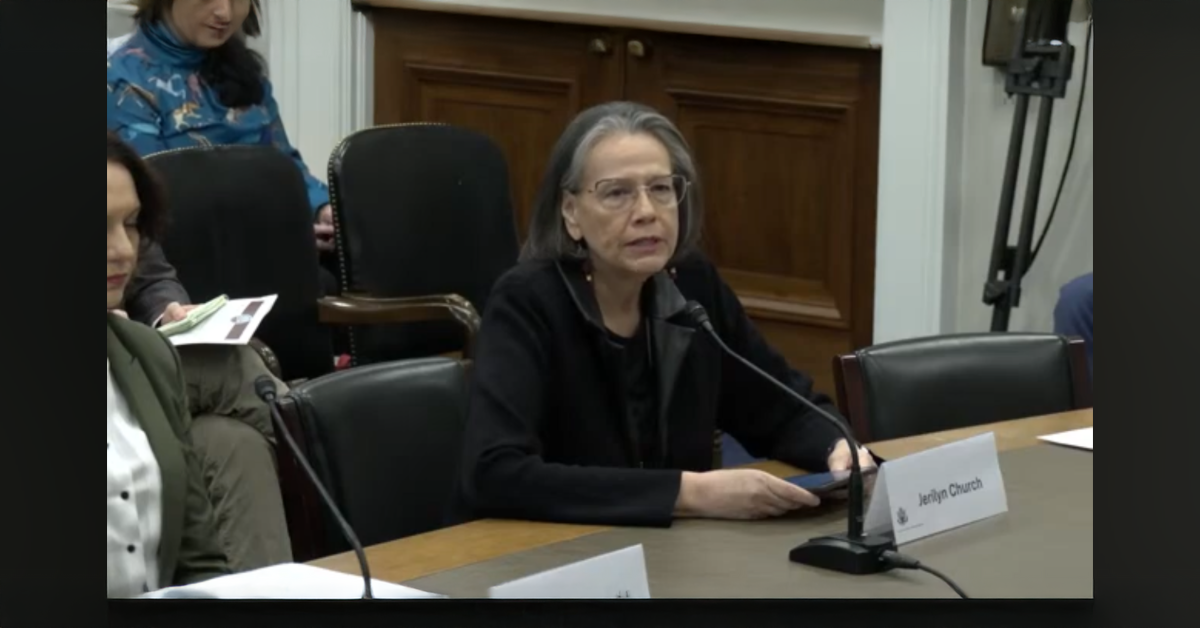
Jerilyn Church, a citizen of the Cheyenne River Sioux Tribe and the President and CEO of the Great Plains Tribal Leaders Health Board, was one of the first to testify. Her remarks blended pragmatic innovation with a stark assessment of the challenges that her people face every day.
Speaking on the importance of Medicare funding and other federal resources, Church emphasized that tribal-nations have the ability to innovate and use the funds to improve care for tribal citizens.
“For example, at Oyate Health Center we got creative,” Church explained, her voice measured yet resolute. “We used a portion of our PRC dollars to purchase insurance for our relatives, and as a result, over half of the relatives we serve are insured now. Our third-party revenue grew from seven-point-two million when we first assumed management from Indian Health Service to a hundred and eight million over (over the last five years).”
Her testimony was not merely a celebration of ingenuity in the face of fiscal adversity—it was also an opportunity to speak truth to power as she detailed the growing health disparities among Native communities. “Between 2019 and 2021, life expectancy decreased again—another 6.8 years, down to 53.6 years,” Church continued. “Our relatives in the Great Plains died from cancer at more than twice the rate of other American Indians and Alaska Natives nationally, and they succumbed to heart disease at twice the national rate.”
Church’s words paint a picture of a health care system that has had to improvise and innovate to survive. As she detailed the evolution of tribal health care, she noted that her organization not only provides direct health services through Oyate Health Center in Rapid City, South Dakota, but also serves as the regional health board for 17 tribes spanning North Dakota, South Dakota, Nebraska, and Iowa. “We refer to the tribal citizens we serve as our relatives, not just patients,” she said—a phrase that encapsulates the Health Board’s holistic approach to care.
Yet even as innovative solutions have allowed her community to expand access to health care, Church warned that the federal government’s retrenchment—especially proposals to cut Medicaid—could unravel years of progress. “Now is not the time to be reducing workforces or budgets,” she insisted, “because these health disparities tell us this is not the time to diminish Medicaid for already under-resourced systems in our region.”
A Battle Waged on Multiple Fronts: Frank Star Comes Out’s Call for Accountability
Frank Star Comes Out, Chairman of the Oglala Sioux Tribe, offered testimony that struck a particularly forceful tone. With a mix of frustration and determination, he recounted a litany of challenges that have left tribal law enforcement severely underfunded and undermined.
“We had to take the government to court because of the lack of treaty obligation in law enforcement,” he declared. “We’re severely underfunded—but we’re not doing anything about it.” His words carried the bitter sting of a long history of broken promises. “One thing I noticed,” he added, “is that the Congress decision to let DOJ law enforcement grants expire in the late nineties is a big factor in why we’re only operating at 15 percent of what we need. It’s beyond me.”
For Frank Star Comes Out, the stakes were not merely budgetary—they were existential. “When you take away those employees from these programs, our people have nothing to look forward to, nothing to seek help from,” he said. “I’ve received calls from government employees—from the BIA, Department of Interior, IHS—asking us to fight for them, to stand up for them.” His testimony underscored a central point: the cuts and freezes affecting tribal programs do not occur in isolation. They are part of a broader erosion of treaty rights and basic protections guaranteed to Native nations.
He painted a grim portrait of life on the reservations. “These are third world countries that we live in,” he stated. “We man our own government and have to figure out how to cover vast areas—roads, schools, and more—while fighting for funding to support our people. We expect you to listen to us, to visit our tribal nations, and to see firsthand the challenges we face.”
History and Heartache: Janet Alkire’s Testimony from Standing Rock
At the Standing Rock Sioux Tribe’s testimony, Chairwoman Janet Alkire delivered a message that was both deeply personal and historically resonant. Her words brought to light the profound consequences of decades of chronic underfunding and the federal government’s failure to honor its treaty obligations.
“Indian programs must be exempt from these firings,” she began. “BIA, BIE, and IHS employees touch every part of our lives and every tribal project. They are already underfunded and understaffed—each doing the work of four people. Losing even one federal employee can bring our government to a halt or threaten life-saving health care.”
Alkire’s testimony was a clarion call on behalf of not just her own community, but of generations of Native Americans. “I’m honored to provide this testimony on behalf of my ancestors, our people back home, and for generations to come,” she said. “Standing Rock signed treaties with the United States, and today our reservation—spanning 2.3 million acres, the size of Delaware and Rhode Island combined—lacks the basic infrastructure that every government needs: law enforcement, healthcare, social services, and veteran services.”
Her impassioned plea was a direct rebuke of federal policies that treat treaty obligations as disposable line items. “Our treaties brought peace and we were promised services and protection,” she declared. “It is time for the United States to live up to its treaty and trust responsibilities. Treaty programs and services cannot be subject to changing politics.”
The Vast Challenges of a Stretched Land: Ryman LeBeau on Law Enforcement and Education
Ryman LeBeau, Chairman of the Cheyenne River Sioux Tribe, offered testimony that laid bare the practical challenges of administering law enforcement and education over vast, often sparsely populated, lands. His words provided a grounded perspective on how underfunding and staffing shortages affect everyday life on the reservations.
“I welcome you with a good heart,” LeBeau began, echoing a traditional greeting from his people. “I thank the committee members for having these hearings and for inviting tribal leaders to testify. But I must tell you—there simply aren’t enough funds for our law enforcement.” He pointed out that the current number of tribal police officers is woefully insufficient to cover the expansive territory of his reservation, which he compared in size to the state of Connecticut.
He also raised concerns about education, noting that his tribe is at the top of the list for a new school with the Bureau of Indian Education. “Our school is in tough shape,” he said, recounting how the boiler once failed, forcing children to wear their jackets to school all day while space heaters struggled to compensate for the failing infrastructure. “The school is over 60 years old, and it was not built by the BIA,” he lamented.
LeBeau’s testimony highlighted that the problems extend beyond mere numbers. “We all have large land bases, which is a blessing,” he noted, “but with that blessing come challenges—especially in law enforcement. The current number of officers is simply not enough.” His call was simple yet urgent: “We need these programs. We hope you can exempt them from the current cuts.”
A Legacy of Survival and a Demand for Respect: Katheleen Wooden Knife’s Story
For Chairwoman Katheleen Wooden Knife of the Rosebud Sioux Tribe, the struggle for adequate funding is personal—a matter that connects her directly to the history and survival of her people. A great-granddaughter of a survivor of the Wounded Knee Massacre, Wooden Knife’s testimony was imbued with both sorrow and steely resolve.
“I am the great-granddaughter of Peter Stands, a survivor of the Wounded Knee Massacre,” she began, her tone reverent. “My great-grandfather’s name was Kills the Horse, and I carry that legacy with pride and responsibility
Addressing the committee, Wooden Knife made a clear demand: “Thank you for the opportunity to speak today on the critical needs for enhanced funding for Indian Country. Federally recognized tribes are facing increasingly difficult choices due to persistent underfunding in Indian education, health care, and law enforcement.” She stressed that the interior budget accounts for less than 5 percent of the federal government’s total, a figure that she argued could no longer be allowed to dictate the fate of Native communities.
Her testimony encapsulated a broader plea for the federal government to recognize that Indian programs and services cannot be at the mercy of shifting political winds. “Treaty programs and services are not negotiable. They are rights that were promised to our people long ago,” she concluded.
The Broader Landscape: Federal Policy and Its Far-Reaching Impacts
While the voices from the hearing were impassioned, their words reflect a much larger policy crisis. Across Indian Country, tribes are grappling with proposals to cut Medicaid funding—a lifeline that supports tribal health services, chronic disease management, and preventive care. At the same time, federal departments have imposed hiring freezes that have left critical agencies such as the Indian Health Service (IHS), Bureau of Indian Affairs (BIA), and Bureau of Indian Education (BIE) dangerously understaffed.
These policy decisions are not isolated administrative changes; they are part of a decades-long pattern of neglect. Direct appropriations have never been sufficient to cover the needs of tribal programs. In response, tribes have had to innovate—redesigning budgets, pursuing alternative revenue streams, and even challenging the government in court to enforce treaty obligations. But as tribal leaders in Washington made clear, such stopgap measures can only go so far.
For many Native nations, the current proposals threaten to unravel hard-won gains. A reduction in Medicaid, for instance, would cripple the innovative strategies that leaders like Church have employed to expand health coverage. Meanwhile, the hiring freeze not only diminishes the capacity of federal agencies to deliver services but also erodes the expertise that is vital for managing these complex programs. Every federal employee who is lost represents a critical gap in a system already stretched perilously thin.
In the halls of Congress, where policy debates are often abstract and removed from day-to-day realities, these testimonies serve as a visceral reminder of what is at stake. Tribal leaders spoke not only as stewards of their communities but as custodians of a long and painful history—a history in which treaties were signed with the promise of protection and support, only to be systematically undermined by chronic underinvestment.
A Vision for the Future: Self-Determination Amid Uncertain Times
Yet amid the stark testimony and dire warnings, there is also a vision—a belief in the possibility of self-determination and a future where Native nations can reclaim their right to govern and serve their people. Jerilyn Church recalled how, in 2016, Spirit Lake Nation in North Dakota became the first tribe to achieve self-governance, followed by the Winnebago Tribe of Nebraska in 2018 and Oyate Health Center in Rapid City in 2004. These milestones, though few, demonstrate that when tribes are given the authority and resources to manage their own affairs, significant improvements in service delivery and community well-being follow.
The path to true self-determination, however, is fraught with obstacles. In a climate of budget cuts and hiring freezes, building the internal capacity to manage vast responsibilities—from health care to law enforcement and education—is an uphill battle. Tribal leaders argue that the federal government must reimagine its partnership with Indian Country, moving away from a model of dependency on unstable direct appropriations and toward one of sustained, predictable investment.
Such a shift would require a fundamental change in how treaty obligations are viewed—not as relics of the past, but as living commitments that continue to bind the United States to its promises. The federal government’s failure to honor these commitments has left tribes to fend for themselves in a system that too often treats their communities as budgetary afterthoughts.
The Stakes Are High
The testimony on Capitol Hill is not just a chronicle of bureaucratic missteps or fiscal challenges; it is a call to action. Tribal leaders from the Great Plains are urging Congress to act decisively—not only to restore funding and staffing levels but to reaffirm the sacred trust between the United States and its Native nations. Their words serve as both a warning and an appeal: the cost of inaction is measured not in dollars alone, but in lives, health, and the very future of Indian Country.
As the debate over federal funding and policy continues to unfold, the voices of leaders like Church, Star Comes Out, Alkire, LeBeau, and Wooden Knife remind us that the consequences of policy decisions extend far beyond the corridors of power. They affect communities that have long struggled with poverty, inadequate health care, and the erosion of basic services—a struggle that is as much about honoring a legacy as it is about securing a future.
In the midst of political uncertainty—exacerbated by shifting administrations and proposals that threaten to dismantle hard-won gains—the message from the Great Plains is unequivocal: the time for incremental change has passed. What is needed now is a robust commitment to rebuilding the systems that have long supported Native communities—a commitment that respects treaty obligations, ensures stable funding, and, above all, recognizes that every tribal citizen deserves the dignity of reliable health care, effective law enforcement, and quality education.
Conclusion
The testimony delivered before the House Appropriations Committee is a stark reminder of the deep divides that still exist between federal policy and the lived realities of Indian Country. As tribal leaders confront the twin specters of underfunding and bureaucratic inertia, their words serve as both a chronicle of struggle and a blueprint for renewal. They are calling for a future in which Native nations are no longer at the mercy of shifting political winds but are instead empowered to govern themselves and thrive.
For the tribal leaders of the Great Plains, the stakes are nothing less than the survival of their communities and the fulfillment of centuries-old promises. As Washington debates proposals that could reshape the future of Indian Country, the voices from the hearing remind us that justice, accountability, and respect for treaty rights are not mere political talking points—they are the very foundation upon which the future of Native nations must be built.
In the coming months and years, the decisions made in the halls of Congress will determine whether the legacy of broken promises is finally put to rest or whether the cycle of neglect continues. For now, the leaders of the Great Plains remain resolute. Their message is clear: honor the treaties, restore the funding, and invest in a future where every tribal community can flourish. The time for decisive action is now.