
For too long, Native people in and around Rapid City faced barriers to consistent, quality care. In 2010, local tribal citizens raised concerns about the care being provided at Sioux San Hospital. That same year, national attention – including the 2010 Dorgan Report – brought visibility to the serious challenges facing healthcare in Indian Country. Soon after, emergency room services at Sioux San were suspended following standards of care violations identified by the Centers for Medicare & Medicaid Services (CMS)
Those moments weren’t just setbacks; they were a turning point. OHC represents a community-driven shift toward local control, improved systems, and stronger care – led by the tribes and guided by community needs.
How We Got Here:
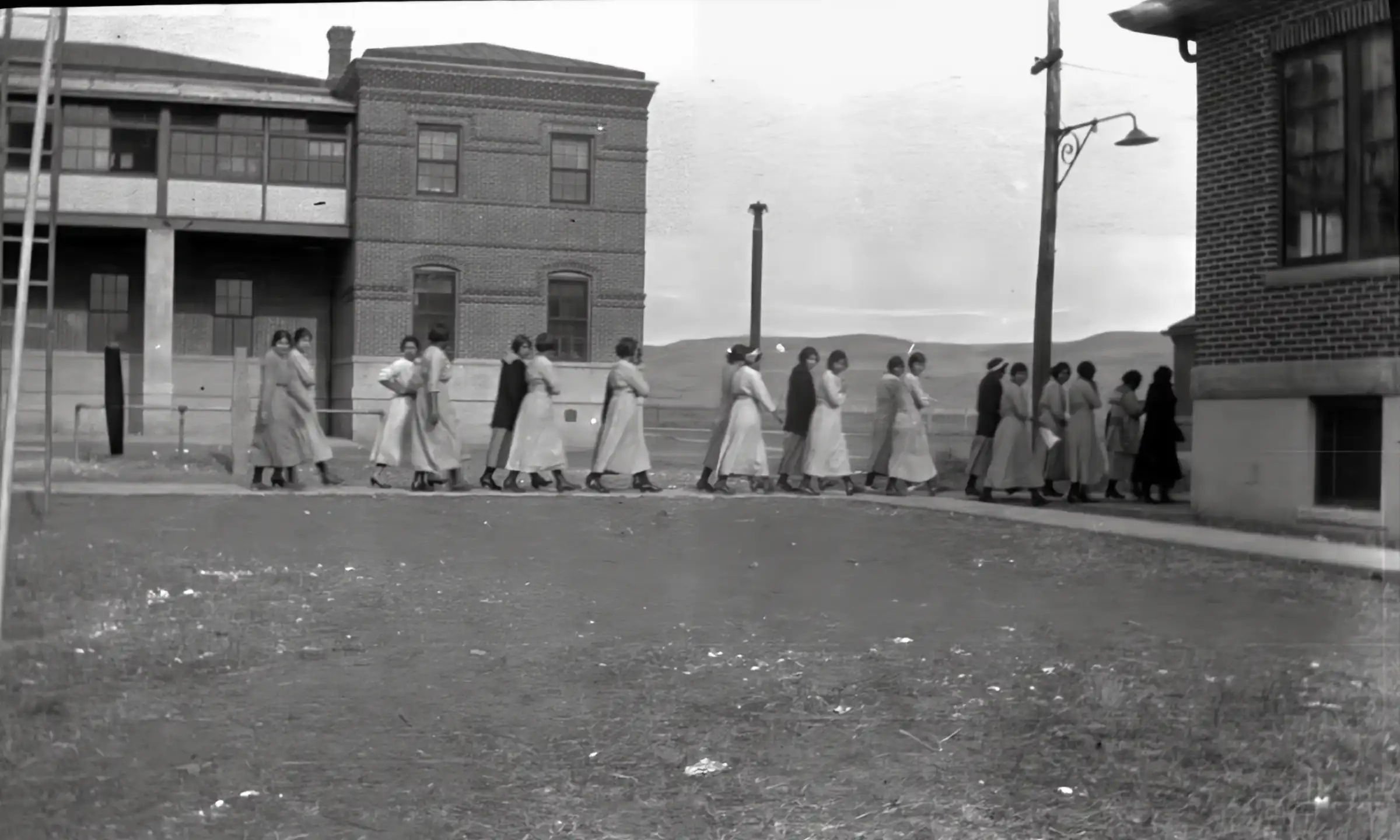
- 1898: The Rapid City Indian School (also known as the School of the Hills) is built and opened as one of 28 federal off reservation boarding schools in the U.S. Students are taken from the Sioux, Cheyenne, Shoshone, Arapaho, Crow, and Flathead Nations. Children are required to speak English and follow strict assimilation policies.
- 1917: Curriculum is extended to include the tenth grade.
- 1898–1933: At least 50 children and infants die, though the true number is believed to be much higher; record keeping on deaths and burials is incomplete or missing.
- 1929–1930: (Transitional Period) – Portions of the school begin conversion into a tuberculosis treatment area for students.
- 1933: The Rapid City Indian Boarding School permanently closes following changes in federal policy away from forced boarding school attendance. After the school’s closure, the Civilian Conservation Corps (CCC) temporarily occupies the facility as part of a federally funded Depression‑era work relief program.
- 1938: Construction begins on the main hospital building for a new Native only tuberculosis sanitarium.
- 1939: Sioux Sanitarium (Sioux San) officially opens. Only Native American TB patients are treated. Treatments focus on rest, isolation, and experimental procedures, as no cure yet exists.
- 1943: Streptomycin, the first effective TB antibiotic, is discovered. It will take years before treatment becomes widely effective.
- 1955: Administration of Sioux San transfers to the newly formed Indian Health Service (IHS).
- By 1960: TB deaths drop by nearly 50%. TB is no longer a major public health threat, leading to the closure of many sanitarium facilities, including Sioux San.
- Mid 1960s: As the urban Native population grows in Rapid City, due in large part to federal relocation policie, AN/AN elders and leaders advocate for treaty obligated healthcare access.
- 1966: Congress funds a pilot IHS clinic at the Sioux San site. The IHS program expands over time to include dental care, a 38 bed inpatient hospital, behavioral health, substance abuse counseling, urgent care, optometry, and a women’s clinic.
- 2001: Indian Health Board of the Black Hills is established to address healthcare access and quality concerns.
- 2002: Indian Health Board raises patient care issues publicly and to federal partners.
- 2003: A $4 million renovation project begins, expected to finish in 2005. Improvements include additional lab and x ray spaces, more exam rooms, and better accessibility.
- 2004: Aberdeen Area Office proposes closing Sioux San inpatient services. IHS patients and community members express concerns about underfunding and diminishing services.
- 2006 – IHS signs a program justification document, starting the federal process for building a replacement healthcare facility.
- 2010: Rapid City Native community members called on tribal leadership to take action to improve care at Sioux San.
- 2010: The Dorgan Report documented major gaps in Indian Country healthcare; ER services at Sioux San were suspended following CMS findings.
- 2010: The Hope Lodge, a substance abuse treatment center on the Sioux San campus, catches fire and is destroyed. A lack of fire suppression systems worsens the loss.
- 2014: The Oglala Sioux Tribe, Cheyenne River Sioux Tribe, and Rosebud Sioux Tribe began negotiations to take control of the Rapid City Service Unit.
- 2016: IHS investigates quality of care concerns at Sioux San Hospital.
- 2017: IHS announces closure of Sioux San’s inpatient and emergency services
- 2019: Great Plains Tribal Health assumes management of the Rapid City Indian Health Service Unit.
- Today: Oyate Health Center continues to grow as a tribally driven model of care that is responsive to the community and accountable to tribal nations.